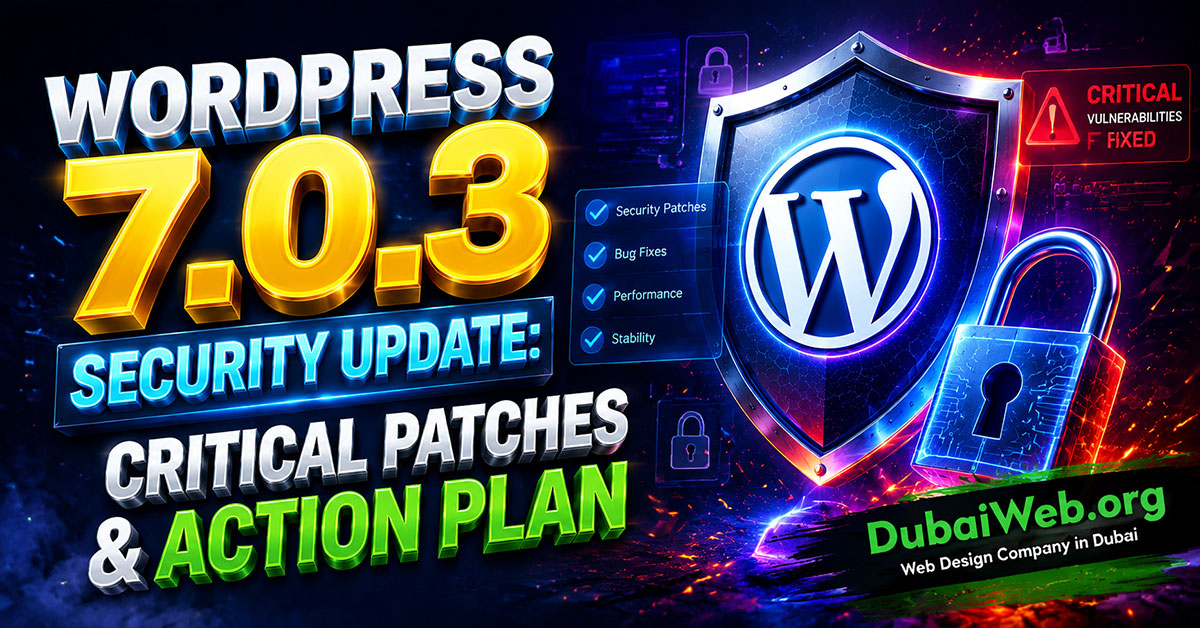
WordPress security requires a combination of regular updates, strong access controls, reliable hosting, and proper firewall configurations. Implementing fundamental measures—such as enforcing two-factor authentication (2FA), disabling built-in file editing, limiting login attempts, and creating regular backups—reduces website vulnerability to malware, unauthorized access, and brute-force attacks by over 90%.
Securing your website is just as critical as high-quality web design and SEO. A security breach can lead to lost traffic, lowered search rankings, Google blacklisting, and severe reputational damage. At Dubai Web, we integrate robust security protocols directly into the website development process to keep your online business safe, fast, and fully optimized.
What Is WordPress Security and Why Does It Matter?
WordPress security is a complete set of technical and management procedures designed to protect your website from malware, unauthorized logins, data loss, and server exploits. Securing a site is not just about installing a single plugin; it is an ongoing strategy that includes:
- Regular updates for WordPress core, themes, and plugins
- Strong, unique passwords and access management
- Two-factor authentication (2FA) for administrative users
- Secure and standard web hosting environments
- Automated off-site backups
- Monitoring file changes and suspicious user activities
WordPress powers a massive portion of the web, making it a popular target for hackers. However, this does not mean WordPress is inherently unsafe. Vulnerabilities almost always stem from outdated software, weak login credentials, nulled themes, and poor hosting configurations. A properly managed WordPress site offers exceptional security and reliability.
What Happens When a WordPress Website Gets Hacked?
A security compromise can cause immediate disruption to your online presence and revenue, including:
- Total website downtime or server suspension
- Unauthorized modification or complete deletion of content
- Theft of confidential user and customer data
- Blacklisting by search engines and security software
- Loss of search engine rankings and organic traffic
- Automated spam distribution from your domain
For businesses relying on their website to generate leads or sales, security issues directly impact profitability. This is why security must be addressed from the initial web design phase rather than as a reactive measure after an attack.
15 Essential Actionable Steps to Secure Your WordPress Site
1. Always Keep WordPress Core, Themes, and Plugins Updated
Outdated components are the primary entry point for exploits. Developers release security updates specifically to patch discovered vulnerabilities.
- Keep minor core updates automated.
- Frequently inspect your dashboard for plugin updates.
- Test major updates on a staging site before applying them to your live server.
2. Use Strong, Unique Passwords
Avoid simple combinations like admin123, phone numbers, or company names. A strong password should combine upper and lowercase letters, numbers, and special symbols. Using password managers helps manage complex credentials without risking security.
3. Enable Two-Factor Authentication (2FA)
Two-factor authentication adds a vital secondary layer of protection. Even if an attacker gains your password, they cannot log in without a secondary verification code. Recommended tools include Wordfence Login Security and Google Authenticator.
4. Limit Failed Login Attempts
By default, WordPress allows unlimited login attempts, opening the door for automated Brute Force attacks. Limiting failed login attempts automatically blocks IP addresses that exceed password retry thresholds.
5. Choose Secure and Standard Hosting
Your hosting infrastructure forms the bedrock of your site’s safety. Inferior hosting environments increase risks of cross-site malware infection, frequent downtime, and DDoS attacks. A standard WordPress host should offer:
- Daily automated backups and server firewalls
- Server-side malware scanning and DDoS mitigation
- Up-to-date PHP versions and active server support
Selecting proper hosting right from the start reduces long-term operational risks. (For technical optimization, learn How to Get a 100/100 Google PageSpeed Insights Score on WordPress).
6. Enable SSL Certificate (HTTPS)
An SSL certificate encrypts communication between the user’s browser and your server, protecting login data and form submissions while building immediate visitor trust.
7. Disable File Editing from the Admin Panel
Allowing code editing from inside the WordPress dashboard is risky. If an unauthorized user accesses your admin panel, they can easily insert malicious scripts into your theme or plugin files. To disable this feature, add the following line to your wp-config.php file:
PHP
define('DISALLOW_FILE_EDIT', true);
8. Set Up Automated Regular Backups
Backups serve as a reliable safety net. If a site is infected or broken by an update, backups allow fast recovery.
- Schedule daily or weekly backups based on how frequently your content changes.
- Store backups off-site on cloud storage like Google Drive or AWS rather than strictly on your host.
9. Monitor Site Activity and File Integrity
Tracking user actions, new administrator accounts, and unexpected file modifications acts like a security camera for your website, enabling rapid response to unauthorized access.
10. Delete Unused Themes and Plugins
Inactive plugins and themes still hold potential security vulnerabilities. Fully deleting unused software lightens your site and shrinks the potential attack surface. Avoid nulled or cracked software entirely, as it frequently contains pre-packaged malware.
11. Change the Default “Admin” Username
Hackers frequently attempt brute-force attacks on the default admin username. Create a custom administrator username and delete or downgrade default accounts.
12. Correct WordPress File Permissions
Improper file permissions can allow malicious scripts to overwrite files. Standard settings include:
- Folders:
755 - Files:
644 wp-config.php: Restricted permissions such as600or440
13. Secure the wp-config.php File
The wp-config.php file stores critical database credentials and system settings. Restrict access to this file via your .htaccess settings or place it one level above the root directory if supported by your server.
14. Restrict Admin Access by IP Address
For corporate networks where managers log in from fixed locations, access to /wp-admin can be restricted strictly to specified IP addresses using server directives or firewall rules.
15. Restrict Access via IP Whitelisting
For businesses needing elevated security, IP whitelisting restricts access to admin environments through host configurations, .htaccess, or server-level firewalls. (To keep your technical setup error-free, see our complete guide on How to Fix the 25 Most Common WordPress Errors).
Best WordPress Security Plugins
Using dedicated security plugins simplifies malware scanning, firewall management, and login monitoring:
- Wordfence Security: Features an endpoint firewall, malware scanner, login protection, and live traffic monitoring. Excellent for comprehensive coverage.
- Sucuri Security: Offers security auditing, file integrity monitoring, malware scanning, and effective cloud firewall add-ons.
- Solid Security (iThemes): Provides an intuitive interface with brute-force protection, 2FA enforcement, and simple security hardening templates.
- All In One WP Security & Firewall: A reliable, free option that categorized security settings into basic, intermediate, and advanced levels without slowing down your site.
Ultimate WordPress Security Checklist
Use this checklist to systematically verify your website’s defense status:
- [ ] Core WordPress, themes, and plugins are fully updated.
- [ ] All admin accounts use strong passwords and 2FA.
- [ ] Unused plugins and themes are completely removed.
- [ ] Automated backups are stored in an external cloud location.
- [ ] SSL (HTTPS) is active across all pages.
- [ ] File editing in the admin panel is disabled.
- [ ] A reputable security plugin is installed and configured.
- [ ] Critical files like
wp-config.phpare protected. - [ ] Secure hosting with firewall and DDoS protection is in place.
- [ ] Technical and structural auditing is up to standard. (Explore our Ultimate Technical SEO Checklist and Toolset).
Common Security Mistakes That Expose Your Site
- Using Nulled Themes and Plugins: Premium software downloaded for free from unofficial sources often contains hidden backdoors, spam scripts, and administrative access bypasses.
- Overloading the Site with Unnecessary Plugins: Installing too many plugins creates software conflicts, slows down your site, and expands potential security vulnerabilities.
- Ignoring Regular Updates: Disabling updates to avoid temporary software glitches leaves known security vulnerabilities completely unpatched.
- Sharing Single Admin Credentials: Giving multiple team members access via a single Administrator account obscures accountability when changes or security breaches occur.
How Security Directly Impacts Your SEO
Security is essential for organic search performance. If your site is compromised, search engines can remove your pages from index listings, flag your site with malware warnings, or lower your search visibility. Google prioritizes user safety and seamless user experiences.
Building a secure foundation ensures that your content, technical efforts, and digital marketing strategies deliver long-term growth. (For insight on optimizing for modern search engines, review our guide: Are You Ready for AI Search? A Guide to SEO, AEO, and GEO in Dubai). You can also streamline your workflow using our curated list: How to Rank #1 in Dubai: 10 Essential Claude SEO Prompts.
The Role of Security in Professional Web Design
In professional web design, security should never be treated as an afterthought. It must be built into the core structure right from the beginning of development through clean coding practices, secure hosting architecture, optimized software selection, and explicit permissions management.
As specialists in web design in Dubai, Dubai Web builds high-performing websites designed with robust security, exceptional speed, and comprehensive SEO foundations to support sustainable business growth.
Summary: Security as the Foundation of Digital Success
WordPress security is a continuous management process rather than a one-time setup. Protecting your website through regular updates, strong authentication, automated backups, and proper server environments prevents unauthorized access, safeguards user data, and protects your brand reputation. Security works hand-in-hand with web design and search engine optimization to build a trustworthy, successful digital business platform.
Frequently Asked Questions (FAQ)
Is WordPress inherently secure?
Yes, core WordPress is secure and actively maintained by dedicated security engineers. However, security risks arise primarily when site owners use outdated plugins, weak passwords, unverified software, or unsecure web hosting.
What is the most effective step to prevent WordPress hacking?
The most impactful steps are maintaining up-to-date software, enforcing strong passwords with two-factor authentication (2FA), using reliable web hosting, and installing a trusted security firewall plugin.
Is installing a security plugin enough to keep a site safe?
No, a plugin is an important defensive layer, but it works best when combined with proper hosting, secure file configurations, user permission management, and regular off-site backups.
How often should I back up my WordPress website?
E-commerce and active content websites should implement daily or real-time automated backups. Standard business websites with infrequent content changes can run weekly backups.
Does security affect Google search rankings?
Yes. If Google detects malware or suspicious behavior on your site, it may show warning screens to visitors or drop your pages from search results until the issue is entirely resolved and audited.