When developing a digital interface, most frontend developers and businesses naturally focus on the heavy hitters: striking color palettes, clean spacing, and readable typography. While these elements form the structural foundation of a website, there is an often-overlooked design detail that quietly dictates a user interface’s entire personality: geometric corner shapes.
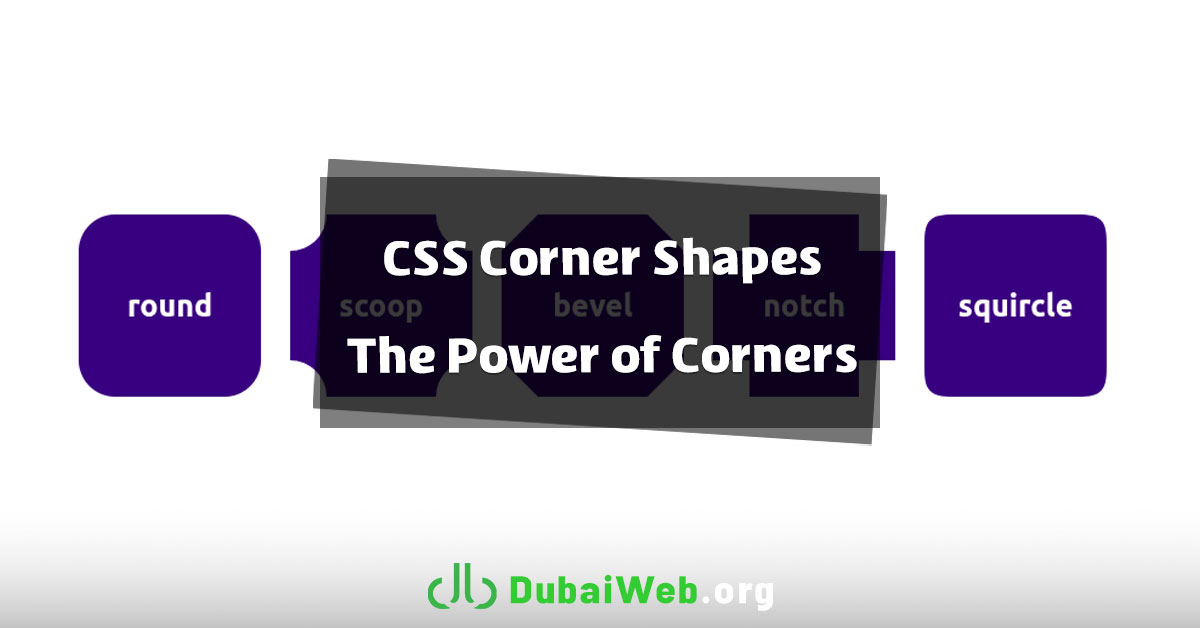
Modern frontend properties allow designers to move far beyond standard rounded borders. By keeping the exact same layout, spacing, and border-radius value, altering just the corner shape geometry completely transforms how users perceive a digital product.
For brands competing in a premium market like Dubai, understanding these subtle psychological cues is essential. Exceptional web design is not just about building basic functionality; it is about refining micro-details to make your platform look polished, highly interactive, and completely aligned with your brand identity.
The Micro-Geometry of UI: Five Essential CSS Corner Shapes
Different geometric profiles evoke specific emotional responses. By implementing advanced properties like corner-shape, you can establish precise styles tailored to your business model.
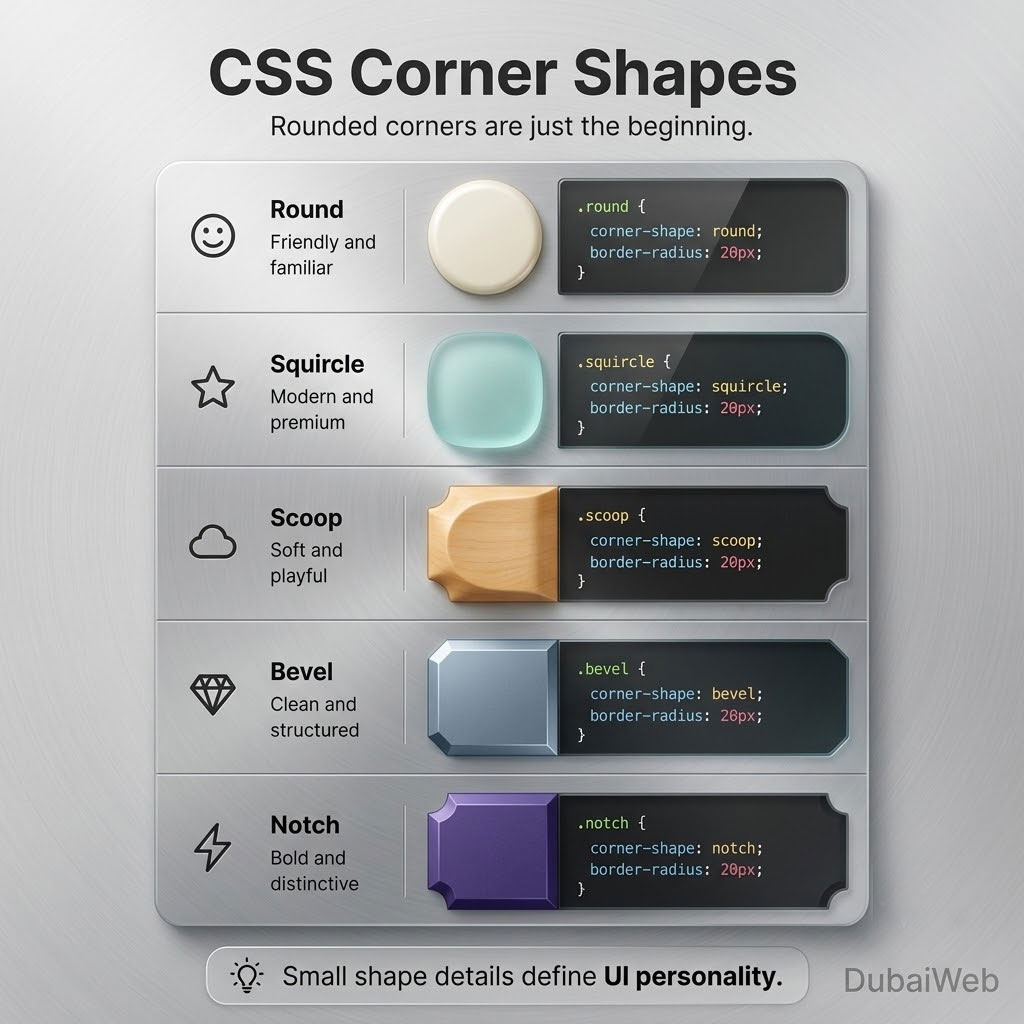
Round (Friendly and Familiar)
The standard round corner is the most widely adopted shape in modern software design. It offers a smooth, organic arc that reduces visual friction. This shape makes an interface feel approachable, safe, and highly intuitive. It is ideal for SaaS platforms, customer portals, and consumer-facing web apps in Dubai where user comfort and immediate familiarity are paramount.
Squircle (Modern and Premium)
Popularized by premium hardware and luxury app designs, a squircle represents a mathematical blend between a square and a circle. Unlike standard rounding, the curvature starts earlier and blends seamlessly into the straight edges. This eliminates harsh geometric transitions, creating a highly polished, sleek, and premium aesthetic. It is perfect for real estate, luxury retail, and elite corporate websites looking to project high status.
Scoop (Soft and Playful)
The scoop cut—an inverted circular arc—curves inward rather than outward. This creates a distinct, soft, and distinctly creative geometry. If your brand wants to highlight artistic expression, boutique services, or interactive lifestyle features, using scoop accents across specific cards or buttons injects a refreshing sense of playfulness and visual interest.
Bevel (Clean and Structured)
A bevel corner features a sharp, straight diagonal cut across the corner edge. This creates a highly structured, utilitarian, and technical look. It communicates precision, efficiency, and engineering authority. Tech startups, logistics networks, and high-end industrial firms in Dubai use beveled UI geometry to emphasize data accuracy and robust architecture.
Notch (Bold and Distinctive)
A notch cuts into the element at right angles, mimicking a ticket stub or a hard military or gaming asset. This profile is bold, highly modern, and distinct. It is an exceptional choice for modern lifestyle brands, entertainment platforms, and cutting-edge digital agencies aiming to leave an immediate, unforgettable impression.
The Core Insight for Developers: The layout grid does not change. The padding and structural margins remain exactly the same. The overall
border-radiusstays constant at 20px. Yet, switching the underlying shape entirely alters the psychological impact of the platform.
How Micro-Details Drive Conversions in Digital Commerce
In web application development, every visual detail influences user behavior. When user components look cohesive and precisely crafted, trust increases. In high-stakes digital environments, user trust translates directly into improved conversion rates.
If a premium financial consulting firm in Dubai uses overly circular, playful buttons, it sends a conflicting message to high-net-worth clients. Conversely, implementing a smooth squircle or a structured bevel subtly reinforces reliability and corporate sophistication. Aligning your micro-geometry with your targeted business persona optimizes the digital funnel, keeping users engaged longer and driving micro-conversions.
Elevate Your Digital Presence with Dubai Web
Stunning user interfaces require a delicate balance of robust code and impeccable design aesthetics. At Dubai Web, we deliver bespoke web design and advanced SEO strategies in Dubai. We pay attention to the fine technical and geometric details that elevate your corporate identity above the competition. Contact with Dubai Web today to design an interface that captivates and converts.
Professional Summary
Exceptional user experience is built upon a foundation of subtle, intentional design choices. CSS corner shapes—ranging from approachable round curves to premium squircles and technical bevels—give developers a powerful mechanism to fine-tune an application’s personality without altering its layout. Embracing these advanced visual configurations ensures your product feels uniquely polished, professionally finished, and perfectly attuned to your audience’s expectations.
Frequently Asked Questions (FAQ)
How do CSS corner shapes differ from standard border-radius?
While border-radius strictly defines the radius of a standard circular arc on an outer corner, properties like corner-shape allow developers to change the geometric profile itself (e.g., squircle, bevel, scoop) while maintaining the same corner radius value.
Which corner shape is best for a premium brand in Dubai?
For luxury, real estate, or high-end corporate brands, the Squircle shape is highly recommended. Its seamless mathematical curvature eliminates subtle visual corners, providing a smooth, premium aesthetic heavily associated with luxury design.
Does changing corner shapes impact website performance or SEO?
No. Implementing modern CSS styles has absolutely zero negative impact on page speed or site performance. In fact, creating a more cohesive, high-quality UI improves user engagement metrics, which naturally supports your long-term SEO authority.